





On most construction sites, high noise levels are just part of the job. But that doesn’t mean they have to be unmanaged.
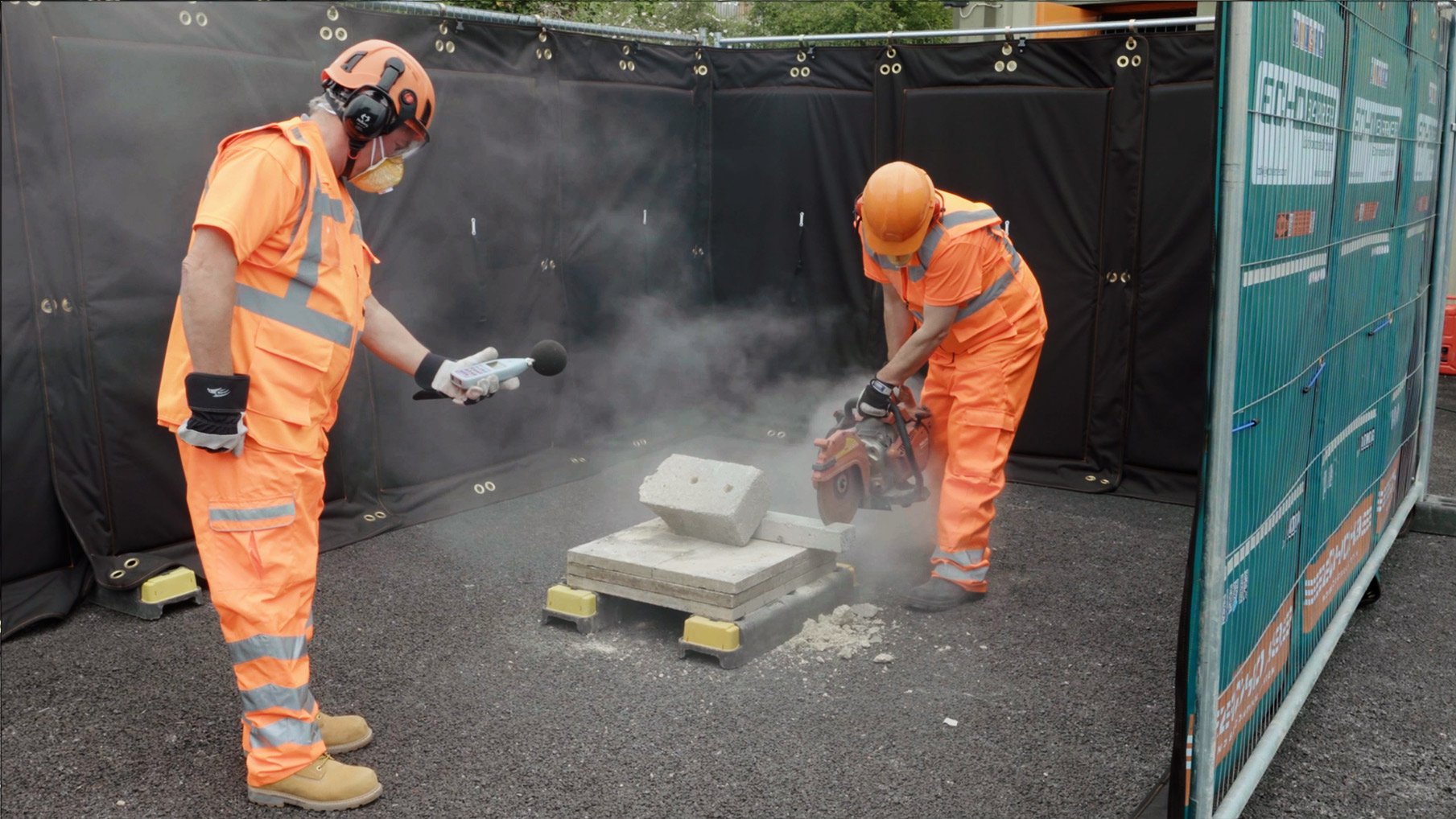
In the video above, a rotary hammer generates over 103 dB of noise—well above safe exposure limits set by organizations like OSHA. Once a portable acoustic barrier system is deployed around the source, noise levels drop by 26 dB.
That’s a significant reduction—and a practical example of how sound control can be applied in the field.
Why Sound Control Matters on U.S. Jobsites
Noise isn’t just a nuisance—it’s a compliance, safety, and productivity issue.
According to OSHA guidelines:
- 85 dB: Action level for hearing conservation programs
- 90 dB: Permissible exposure limit (PEL) over 8 hours
- 100+ dB: Rapid risk of hearing damage without protection
Common equipment—jackhammers, generators, cutting tools—regularly exceed these thresholds.
Without mitigation, we see an increased risk of hearing loss claims, reduced worker communication and situational awareness, leading to accidents and injury.
All these factors lead to a greater likelihood of external complaints and regulatory driven restrictions or even shut downs due to noise
What This Demonstration Shows
This isn’t just a product demo we set out to highlight three core principles of effective sound control in real-world environments:
1. Control Noise at the Source
The most effective way to manage sound is to address it at or very close to the point of generation, not after it spreads.
By placing the barrier directly around the rotary hammer:
- Sound energy is contained immediately
- Less noise escapes into the surrounding environment
- Workers outside the enclosure experience a measurable reduction
This approach is especially important on active jobsites where distance alone isn’t a viable solution to damaging noise.
2. Absorption Matters More Than Reflection
Many traditional barriers—plywood, temporary walls—primarily reflect sound, which can actually increase noise levels nearby.
Echo Barrier acoustic barriers:
- Use high-density, absorptive materials
- Reduce both transmitted and reflected sound
- Improve overall site acoustics—not just block noise in one direction
This leads to a safer and more controlled work environment.
3. Portability Drives Adoption
In real-world applications, conditions change constantly:
- Equipment moves
- Work zones shift
- Crews rotate tasks throughout the day
Portable acoustic systems allow teams to:
- Deploy sound control quickly
- Reconfigure as needed
- Scale coverage based on the task
That flexibility is critical for maintaining both efficiency and compliance.
Practical Applications Across Industries
The same principles demonstrated in the video are used across a wide range of U.S. industries:
Construction & Demolition
- Enclosing high-noise tools and equipment
- Supporting OSHA compliance efforts
- Reducing worker exposure in confined spaces
Infrastructure & Utilities
- Roadwork and rail maintenance in populated areas
- Night work with reduced community impact
Events & Production
- Controlling generator and equipment noise
- Meeting local noise ordinances
Industrial Operations
- Isolating machinery noise
- Improving communication and reducing fatigue on the floor
What the Impact of a 26 dB Reduction means in real life.
Decibel reductions are not linear—they’re logarithmic.
A 26 dB reduction represents:
- A substantial decrease in sound energy
- A shift from hazardous to more manageable exposure levels
- A noticeable improvement in worker comfort and communication
In practical terms, it can mean the difference between requiring strict hearing protection protocols and creating a more controlled, lower-risk environment.
A Smarter Approach to Noise Management
Effective sound control isn’t about eliminating noise entirely—it’s about managing it strategically.
The most successful teams:
- Address noise early in project planning
- Use portable, source-based solutions
- Combine engineering controls with PPE and administrative measures
This layered approach aligns with the hierarchy of controls—prioritizing engineering solutions before relying solely on personal protective equipment.
What can we take away from this demonstration
This example reinforces a key point:
The most effective noise control strategies focus on the source, not the symptom.
With the right tools and approach, it’s possible to significantly reduce noise levels on active jobsites—improving safety, supporting compliance, and minimizing disruption.
In today’s regulatory and operational environment, that’s not just beneficial—it’s essential.
If this makes sense why don't you give us a ring, we will be happy to discuss your requirements in the US or Canada call (800) 728 9098